




First reindeer pass through Seward Peninsula’s newest corral
Anyone driving to Teller during the summer of 2024 noticed the construction east of the Teller Highway at mile 48. It consisted of gap-spaced walls placed at unusual angles with no roofs.
Locals knew it was a corral building project spearheaded by Teller resident Jimmy Pushruk, a retired State of Alaska equipment operator and long-time reindeer herder. Pushruk and his supporting cast had set up a sort of “if you build it, they will come” situation.
But bad weather and tough snow conditions made it impossible for them to bring the herd in during the corral’s first two years, so it sat vacant. By this summer, Pushruk and his sister Brenda Pushruk were quite anxious to test their creation.
Pushruk, who manages the Kakaruk reindeer herd, knew his deer were out there somewhere. His unfenced grazing grounds start at the Bering Sea and extend from the tip of Point Spencer to around 30 miles west of Imuruk Basin. This 1,200 square mile area was way too big for him to search on foot, as he did in his youth, or even by four-wheeler. So, he turned to a method pioneered by the late bush pilot Jim Isabell in the 1970s — a helicopter.
Pushruk’s logical choice for wingman was Patrik Toerdal, who has flown the Teller herder around doing range studies, looking for lichen and other foraging foods. Toerdal had also taken the late reindeer industry stalwart Tom Gray of White Mountain up in the air to move his herd.
Toerdal landed in Teller at 10 a.m. on Friday, June 26, to pick Pushruk up in a Bering Air helicopter. After finding no deer along the hills south of Teller, the pair headed to the Kigluaik Mountain Range, which is surrounded by the Kakaruk grazing grounds. They zigzagged through deep valleys along the range’s western edge until they discovered several hundred deer. “They were way up in the mountains on a patch of snow. I couldn’t believe how high they were,” Pushruk said later.
Toerdal thought the deer were around 2,700 feet above sea level and just behind Grand Singtook, the mountain also known as 3870.
There, some 15 miles as the crow flies from the corral, the chopper and its hooved partners began a strange dance. The deer had not been driven in some time, so their wild side was evident. “We had a hard time getting them off the mountain because they kept wanting to go higher,” said Pushruk.
The men eventually coaxed the cluster into descending by relying on the pilot’s flying skills and the herder’s knowledge of reindeer body language. “After a while, we got them going in the direction we wanted,” said Pushruk.
Once the herd was about four miles from the corral, the fliers took a break to allow Pushruk’s crew to drive the 27 miles from Teller. When the first wave of helpers arrived, Pushruk explained his plan. Then the pilot and he went back up to finish guiding the animals into the corral’s wing, which is made up of two long lines of posts holding up an eight-foot-tall wire-mesh fence.
A group of approximately 30 escaped. But the ground team funneled the rest into the large circular holding pen enclosure around 1:30 pm.
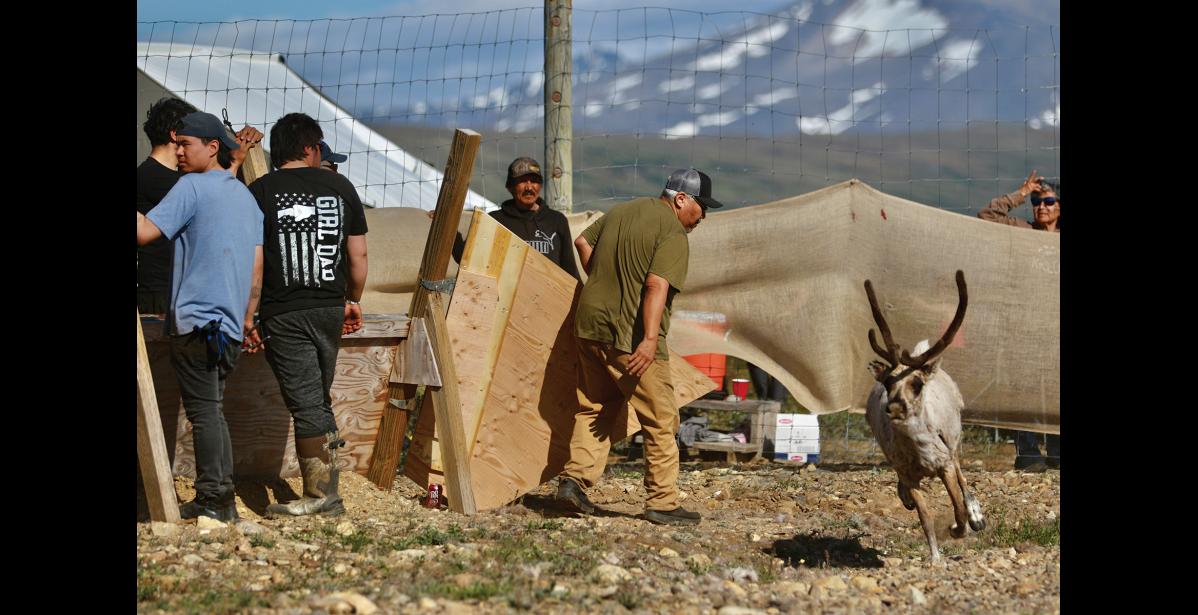
At first, the tightly compressed mass kicked up dust as it moved around nervously in its customary counterclockwise direction. But the long sheets of burlap hanging along the edges of the enclosure helped calm them. Then, the animals rested until the next phase of operations commenced. Some ate leaves. Many grunted. The fawns whined for their mothers until reunited.
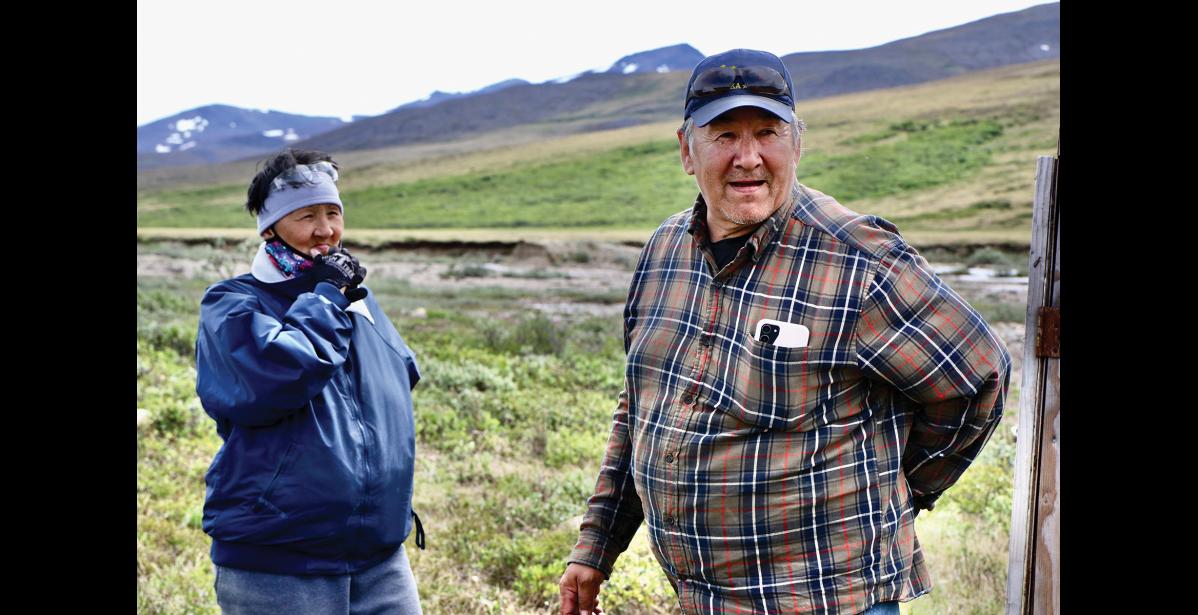
Toerdal’s job was done, and Pushruk returned to the corral. While he waited for more workers, his life partner, Lucinda Menadelook, distributed donuts and soup that she made for their crew. She is a testament to the fact that everyone in Teller has ties to reindeer. Menadelook grew up around her late Uncle Roger Menadelook’s corral near the Kuzitrin River. She was thankful that the sun had come out and was hopeful that the nice breeze would continue to chase the bugs away and keep the heat down.
Abu Oquilluk made it to the corral in the early afternoon. “It’s good seeing and smelling them and hearing them again,” he said. Oquilluk is the grandson of Mary’s Igloo herder, William Oquilluk, who lived during the reindeer fair days at Pilgrim Hot Springs. His grandfather authored the seminal book, “People of Kauwerak.”
Before long, former reindeer owner Jimmy Noyakuk arrived to install a swinging door on the chute, the corral’s tight V-shaped terminus where each deer is recorded and unmarked deer are given ear tags. Noyakuk, a carpenter by trade, was the project architect. He designed three small waiting rooms, called “pockets,” that deer would pass through as they were transferred from the holding pen to the chute.
Noyakuk used to keep his reindeer on the north side of Imuruk Basin until they were taken away by caribou. Pushruk told him that he had secured funding from Kawerak Inc. to put up a new structure. Noyakuk wanted to be involved.
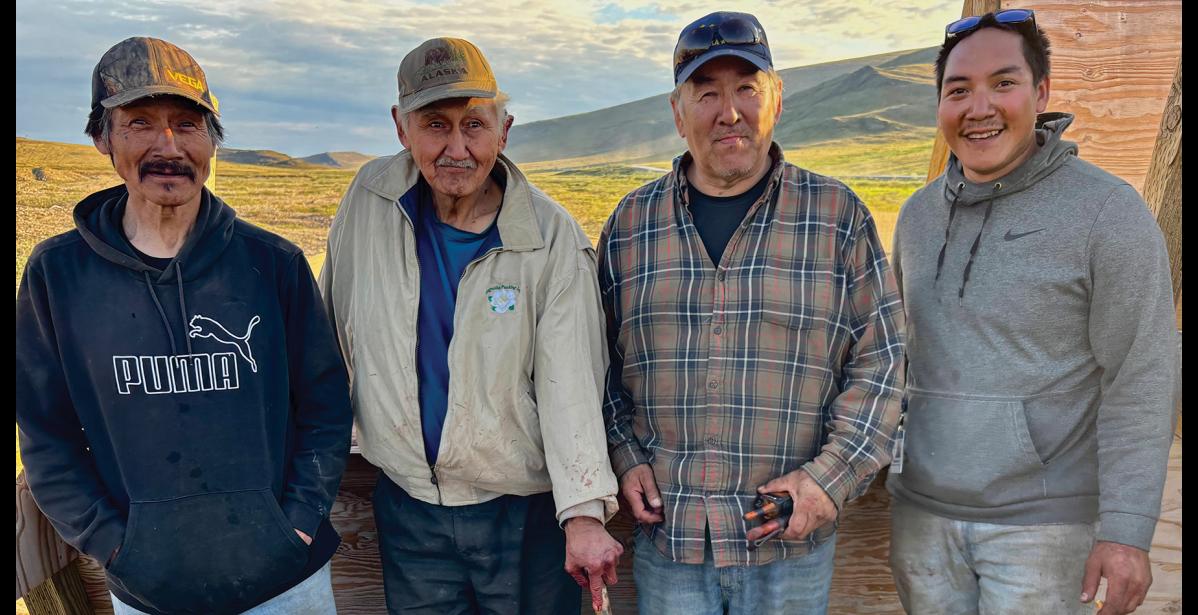
“He was a big force in building the reindeer corral. All the young people who helped us build it look up to him, really respect him,” Pushruk said.
The corral utilizes gifts from an assortment of reindeer herders. Pushruk salvaged some fencing from the old Menadelook and Noyakuk corrals. Brenda and her life partner, Delbert Okbaok, a former reindeer herder, created fence posts from driftwood collected in Nome. The late Tom Gray sent extra burlap and fencing to Teller. Pushruk said Gray convinced him to add “a mothering pen” at the end of the corral, which makes it easier for females to find their offspring.
For many years, the Kakaruk operations were based at a corral at the mouth of Canyon Creek, where Tuksuk Channel meets the Imuruk Basin. Storms, both summer and winter, had taken their toll on the aged structures there over the years, so the Kakaruk deer have gone unmarked for quite a while.
According to State of Alaska statistics, the herd’s population has fluctuated between 1,500 and 3,000 in recent years. The last time they were handled was in February of 2015, when Pushruk’s operation borrowed Brevig Mission herder Leonard Olanna’s corral at the northwest end of Grantley Harbor in exchange for a set number of reindeer.
As the deer relaxed in the holding pen, Cameron Okbaok raced from Nome in his truck after work. Both sides of his family were involved in the reindeer industry. Cameron’s father, Jerry Okbaok, who was also in attendance, was a herder who spent days walking with various herds. Jerry’s ventures included transporting deer to the Canyon Corral from as far away as the Feather River. Cameron says his father taught him the importance of “going out into the country to get your own food.”
Cameron’s arrival around 4 p.m. was the catalyst for the operations to go into full swing. Before long, he was leading a group of young men to move reindeer from the holding pen into the first pocket. That entailed separating a small group from the main bunch by following them around while waving their arms.
At 4:50 p.m., the first reindeer entered the chute connected to the smallest and last pocket. Abu Oquilluk held the door shut while Cameron and a few others held the animal in place. Brenda handed a marking device to her brother, who used it to attach a bright orange Kakaruk tag to the animal’s left ear. Pushruk called out “maverick female” to Cameron’s cousin Kasey Okbaok, the round-up’s official recorder, who stood just outside the fence. Then Oquilluk opened the door and released the first-ever reindeer to pass through the new corral. Jimmy Noyakuk and Delbert Okbaok stood smiling a few feet away.
At 4:53, the first Kakaruk fawn received an earmark. Then, for nearly five hours, the team moved deer through the system, one by one, until the outer holding pen was empty and the mothering pen was full.
The final tally of reindeer receiving their first tag was 256, of which 74 were fawns. There were four previously marked deer carrying the Gray herd’s purple tags, and six that had old Kakaruk marks from 2015. Around 9:50, the pen’s gate was opened, and all were released.
Pushruk says that for the older guys, this round-up brings back memories of wrestling reindeer, cutting horns, and walking long hours with the herd. “All the many young people that helped us build it, they’re actually seeing reindeer now and seeing the whole operation,” he said.
The builder of the Seward Peninsula’s newest reindeer corral often mentions that this endeavor was a collaborative effort. “WE did it,” he says.