

Senator Lisa Murkowski visits Nome, talks election, projects and priorities
By Anna Lionas
One day after the midterm elections Sen. Lisa Murkowski touched down in Nome for a visit.
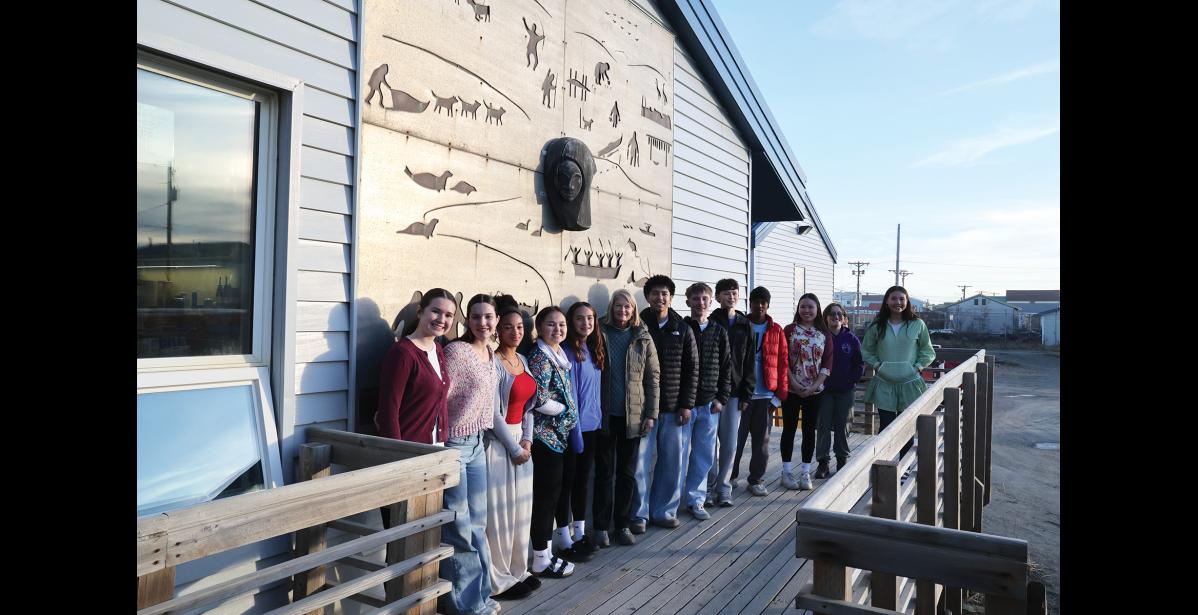
“You are the first stop on my ‘Get back to work tour,’” Murkowski told students at ANSEP Acceleration Academy during her Wednesday visit.
The Republican senator – who was not on the ballot this year — was coming off the heels of an election where the country prolifically voted for Democrats, and she entered Nome at a busy time, with the port expansion underway.
Murkowski announced for the first time that she’s eyeing the top Republican seat on the Senate Appropriations Committee next year, an influential position in terms of access to federal spending. Murkowski has been a member of the committee for a number of years and with the current chair, Sen. Susan Collins of Maine, losing her re-election bid, Murkowski is in line for the ranking position but she still needs to be elected by fellow Republicans. The committee chair will be a member of the Democratic majority.
Port of Nome visit
Murkowski zipped around Nome leaving dust clouds in her wake. The Senator paused her busy itinerary once to leave buzzing staffers and city employees behind to walk over to the shore and look out at the sea.
She stopped by the port to check out progress on Phase 1A of the expansion project which has started this summer. The senator has been a big supporter of the project. She recently announced, along with other members of Alaska’s congressional delegation, $11.25 million in federal funding to go toward local service infrastructure.
The topic came up when she was speaking to students at ANSEP. During a question-and-answer session she was asked about the port’s impact on marine mammals and the shoreline as a whole.
“Some would say if we didn’t build a port there won’t be any disturbance out there,” Murkowski said pointing to the sea. “That’s not what’s happening. We didn’t necessarily invite them in but the world is going by your window here.”
Murkowski cited the increased traffic of Russian oil tankers, cruise ships and Chinese cargo ships moving through the Bering Strait. That’s why it will be important for people to stay engaged locally, she told the students, so they can have a say in the things impacting Nome.
In an interview with KNOM Murkowski said she is actively encouraging the Coast Guard to have more of a presence in Nome. Another reason for her support of the port expansion is it will allow Coast Guard vessels to dock here, she said.
Development of resources was also on the Senator’s mind during and after her trip. She discussed Graphite One with ANSEP students who asked her about the environmental impacts the potential mine could have on the region where they live and subsist.
“We have resources on our land, under our land, in our waters. There are opportunities if we are responsible in how we access them,” Murkowski told students.
With graphite, a coveted material, now predominantly imported from other countries, there’s an opportunity for the U.S. to become independent from countries like China, she said, but the goal is to extract it in a responsible way.
One day after her visit, when speaking to the University of Alaska Board of Regents, Murkowski again referenced Graphite One and graphite’s potential use in nuclear energy to bring down overall costs and the job opportunities it could bring.
Local Priorities
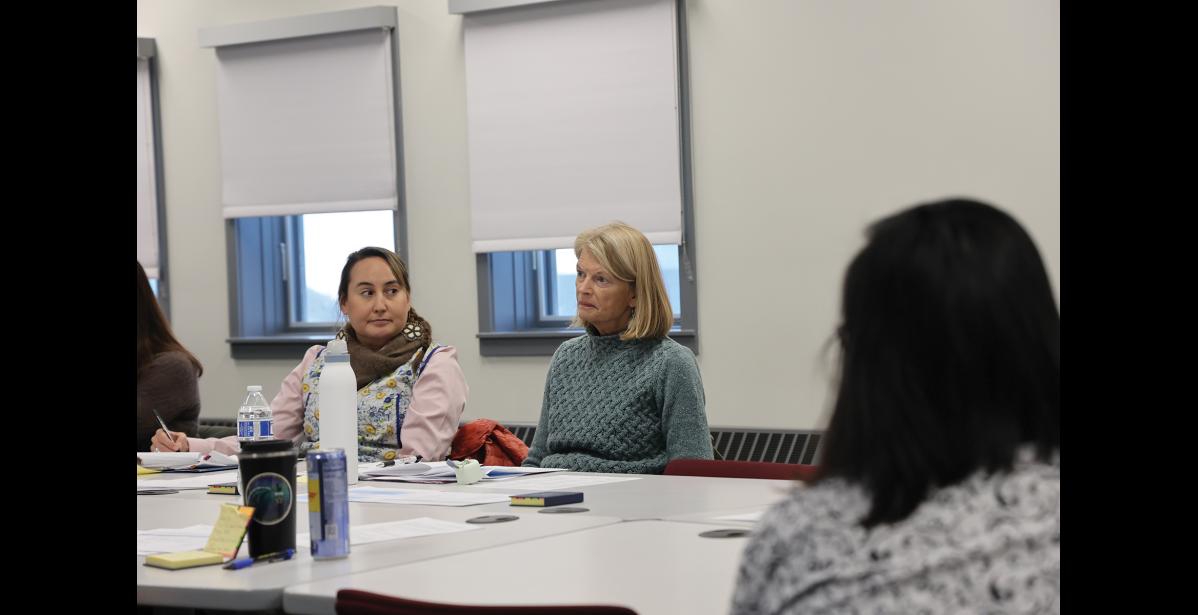
Murkowski met with the Bering Strait Development Council, the local Alaska Regional Development Organization, or ARDOR, that focuses on local economic growth and collaboration between local entities. The meeting focused on top priorities of all the communities in the region and a look into opportunities and challenges for growth in the future.
Housing came up again and again. It’s a need in the region and a barrier to development as businesses look to hire more people and large projects like the port and potentially the proposed Graphite One mine ramp up. But the pains of overcrowding are felt in smaller communities, too.
The population of Savoonga has almost tripled in the last 50 years, Benjamin Pungowiyi, St. Lawrence Island representative on the board said, and housing hasn’t kept up with this increase in people.
“We’re also in the top 2 percent of most remote villages in Alaska, the only means of transportation is through air in the winter months,” Pungowi said. “The cost is outrageous, close to $1,000 round trip to Nome.”
High cost of living across the region was emphasized throughout the conversation. As ARDOR councilmembers shared the priorities from their areas, they highlighted the high cost of groceries, gas, heating oil.
Murkowski mentioned the $200 increase to the originally $1,000 permanent fund dividend this year, a result of the higher costs of oil. “But you tell me anybody that thinks they’ve got spare change left after $200,” Murkowski said.
The senator said meetings are in the works with the next governor, which according to latest polling results as of press time is likely to be Jonathan Kreiss-Tomkins, to discuss ways the state can help out with “short-term support and help for communities” facing high costs.
“This is something that I’m keyed in on,” Murkowski said. “I know that at the federal level, it’s more long term. But how we can partner the federal with the state, this is important.”
Speaking of the election, Murkowski said with more Democrats in Congress it could be easier to restore federal funding to public broadcasting, a priority of hers since July 2025 when cuts were made.
Scant federal presence in Nome
Gay Sheffield, ARDOR council member and Alaska Sea Grant agent, shared about the threats to the marine ecosystem: climate events, ecological occurrences like harmful algal blooms and increased ship traffic both domestically and internationally.
“But for all the comprehensive utilization of the marine ecosystem here, marine mammals, seabirds, all the federal fisheries, both commercial and non-commercially important, the largest federal presence we currently have is the Post Office,” Sheffield said.
Murkowski asked about U.S. Fish and Wildlife Service, who’s offices closed in Nome after the employee passed away. “You didn’t have anybody outside of law enforcement? Not on the research side?” Murkowski asked, to which Sheffield said no.
“What’s amazing about the Bering Strait region is we are left on our own here and it’s a real weakness and it’s a terrific strength because the smartest people in this region, about this region, are in this region. and we could use some help,” Sheffield said.
When she finished hearing all the priorities and concerns of ARDOR members, Murkowski thanked the group; said it was helpful to have “an inventory of need community by community” so she and her staff can figure out how to help on the federal side.
At the conclusion of the ARDOR meeting, chair of the committee Megan Onders presented Murkowski with a set of long dangling earrings with explosions of fur hanging at the end. “This is the year of big auntie energy earrings,” Onders said, handing them to Murkowski with a grin.