
Hoogendorn brothers win ‘Race to Survive’
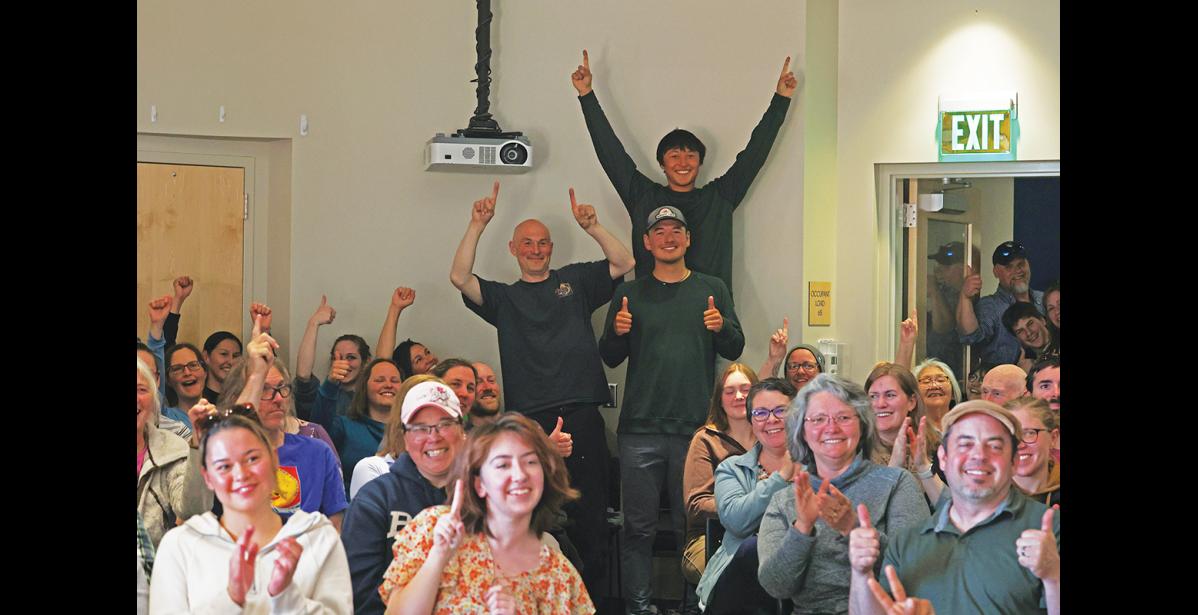
Oliver and Wilson Hoogendorn arrived to a wave of enthusiastic applause at Katirvik Cultural Center on Monday evening. Over the last ten weeks, viewers across the country had been watching the Iñupiaq brothers from Nome dominate the reality TV competition series “Race to Survive” on USA Network. And now the Hoogendorns were in a packed room in their hometown to watch the final episode among proud relatives, friends, neighbors and former teachers. During commercial breaks and after the show, they answered questions and told stories about their surreal experience.
“This is a dream come true,” Oliver said, looking out at the crowd. “I thought, man, it would be so cool to watch the show in the library.”
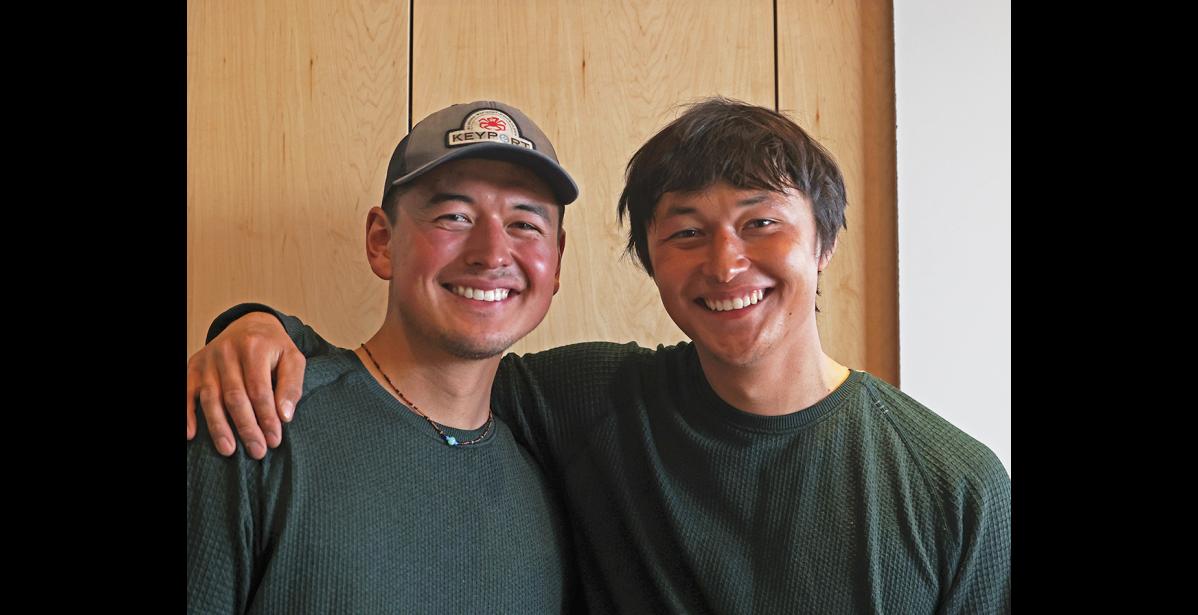
Dressed in matching green shirts, the brothers were equipped with the big backpacks they used on the show—and a big secret. Though filming for the series wrapped nearly a year ago, they could not tell anyone whether or not they won the $500,000 prize. They said the penalty for breaking their silence before the show ended would be $1 million.
The TV show had eight teams of two race against each other in various legs across tough Alaska terrain with limited supplies for survival. Dubbed the “AK Boys” by their fellow castmates, the Hoogendorns may have appeared to have had a hometown advantage to outsiders, but they said were out of their element in the filming locations in the southern portion of the state. The show portrayed the brothers’ biggest struggle as navigation, and they confirmed that was true. Traveling through thick forests with tall trees is much different than traversing tundra landscapes. Wilson said it was his first time having to use a compass and he watched YouTube videos to learn.
Though the brothers had won all five previous challenges, the last episode was still full of suspense. Only three teams were left for the final two-day challenge. The Hoogendorns were pitted against Brooklyn siblings Cason and Bella Crane and Seattle friends Max Djenohan and Christian Junka. After they were all dropped off on a sandbar in the Cordova area, they had to navigate through a maze-like forest to find packrafts that would take them down the Copper River. Then they’d have to swim across an icy pool of water, climb the slippery three-story face of a glacier, navigate more forest, find more packrafts and tackle more rough waters before the final hike to the metal crate that contained a set of two medallions for the winners.
The Hoogendorns were initially in the lead, with Djenohan and Junka close behind, but then they realized they had lost their way. Wilson told the crowd that he realized they were going in a circle when he put his hand on the same alder tree twice. Djenohan and Junka were in the lead by the time the teams had to stop for the night and make their last camps on the side of the river. The Hoogendorn brothers built what looked like a “Nome fire” out of driftwood on the beach and seemed reflective on their final night.
“My mom would always tell me stories of all the cold winters or times when they didn’t have too much food,” Oliver said in the show. “Now that I’m super hungry and getting cold, it just gives you that much more respect for her.”
Throughout the competition, contestants performed physically demanding and technically challenging feats. But the most difficult part for the Hoogendorns was hunger. They were given limited food and otherwise had to live off unfamiliar land. Oblivious crew members who were filming the show would come around licking their lips after scarfing down a peanut butter sandwich or initiate an interview smelling distinctly of a chocolate PowerBar. The competitors, meanwhile, had to pick at foods like mushrooms full of maggots, alder cones and goose tongue greens. Wilson said he slept as much as he could on his days off so that he wouldn’t have to feel hungry. But even in his sleep, he was tormented by vivid dreams of food. He described one dream in which he had a birthday cake covered in frosting and Cheez-Its. When he was awake, he’d write down all the recipes of the things he would make when the competition ended. That hunger would miraculously vanish when the race clock started. Oliver compared it to being like a sled dog that’s totally committed to the race once they start down the trail.
While the show played up the discord in some teams, the Hoogendorns said they felt they were accurately portrayed. They came off as humble as easygoing, and they really do get along as much as they appeared to on TV. They thought that being brothers who already have such a strong, often unspoken, system of communication gave them an advantage. That, and their running shoes. They said the other competitors initially bashed their choice of footwear early on. By the end, the other teams were dressing like the Hoogendorns. Wilson passed around his pair of black and neon green La Sportiva trail running shoes for the crowd in Nome to inspect.
When the filming was over, they regained the weight they lost and got accustomed to using their phones again without getting motion sickness. They’ve maintained friendships with some of their fellow competitors. Oliver said he recently visited New York for the first time to see the Crane siblings. He was even more impressed that they were able to perform well in Alaska after seeing the metropolis they grew up in.
Filming the show over nearly two months gave the Hoogendorns a lot of time to think, and their thoughts often drifted back home.
“It made me really thankful for the relationships I have and my friends,” Oliver said. Wilson added he was grateful for “real, genuine people that talk to you like a normal person.” They weren’t supposed to have real conversations with the crew and producers who were trying to keep up with the competitors and occasionally pulling them aside for interviews. They weren’t even supposed to talk to anyone when they’d have to sit in airports between race legs. The brothers recalled sitting in the airport in Ketchikan on their way to Kodiak and hearing tourist after tourist pass them and them and say, “Mmmm, smoked fish.” It took a few times for them to realize they were the ones who smelled like smoked fish.
Disagreement about the correct route led Djenohan and Junka astray on the second day of the final race. Throughout the competition, the Hoogendorns had a history of deleting other teams’ leads on the second-day legs. And now they took their chance to sneak ahead.
When they got to the final box and pulled out the medallions, the room in Nome erupted in applause. As the brothers were about to secure their victory, Oliver’s voiceover said the prize would help him put money back into Nome.
“If we can succeed, I think we should try and give back to the people that helped us become who we are.”