
SBA administrator Guzman hears region’s concerns
The head of the Small Business Administration, or SBA, visited Nome last week during her tour of Alaska.
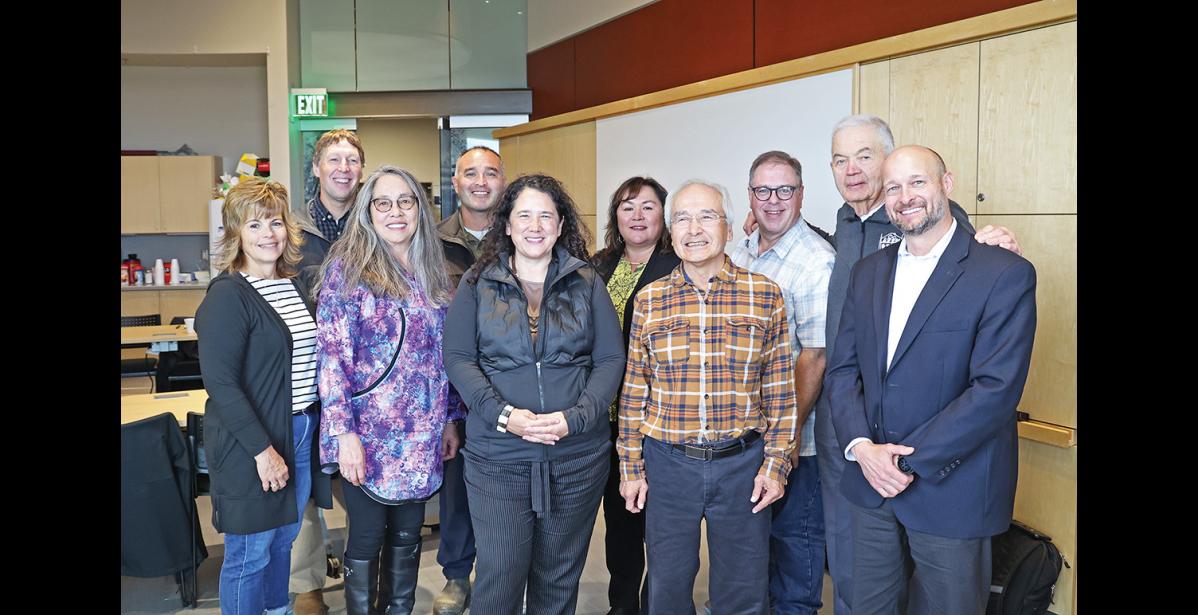
SBA Administrator Isabella Casillas Guzman is one of 24 members of President Joe Biden’s Cabinet. Last Wednesday, she heard about challenges to doing business in the region during a roundtable with local entities including Kawerak, Bering Straits Native Corporation and Bering Straits Regional Housing Authority. She also affirmed her commitment to 8(a) small business contractors—a group that includes disabled-veteran-owned businesses, woman-owned businesses and Alaska Native corporations.
During the roundtable at the Katirvik Cultural Center in Nome, BSNC board chair Cindy Towarak Massie told Guzman that Bering Straits Native Corporation gets most of its revenue through the 8(a) program.
“To me, that’s a little scary,” said Massie. “I feel like it could be a signature on paper and then that’s taken away. Let’s fight for that and keep that going. Our corporation is unique. It’s not one where we can buy and sell stock, and we’re not there just for profit—we give back to the people as much as we can.”
The 8(a) program was designed to help certain disadvantaged groups compete for federal contracts, but it saw major changes after a legal decision. In July, the U.S. District Court for the Eastern District of Tennessee ruled that SBA could not presume individuals to be socially disadvantaged based on their race and ethnicity alone. The court relied on reasoning in the U.S. Supreme Court ruling that struck down affirmative action programs for college admissions. According to new guidance from the SBA, 8(a) participants will now have to complete a “social disadvantage narrative” to remain in the program.
Guzman said the decision “did not eliminate the 8(a) program” but narrowed the presumption of disadvantage based on race. She assured that she sees “endless advocates” in government trying to ensure the 8(a) program’s continued success.
“These are significant contracts that we depend on to advance all our agency missions,” Guzman said. “In a time that we’ve seen declining interest in federal contracting—we’ve seen a 40 percent decline over the last 10 years—this is a really critical program.”
When Guzman arrived in Alaska early last week, her office announced the extension of the moratorium on the “bona fide office” requirement for 8(a) businesses through September 30, 2024. This means that 8(a) businesses can continue getting contracts for construction work in states where they don’t have a physical office. The “bona fide office” requirement was lifted in 2021 as a response to the COVID-19 pandemic. Earlier this year, the Alaska delegation introduced legislation to permanently lift this requirement.
Kawerak President Melanie Bahnke said that the tribal nonprofit organization has been a partner with the SBA and the state when it comes to providing technical assistance to the region’s small businesses. The SBA also offers disaster assistance. As many in the region learned last year, individuals must first apply for an SBA loan before being considered for state or non-housing-related FEMA assistance. Bahnke thanked Guzman and her staff for their help during Typhoon Merbok.
Bahnke had a list of recommendations for Guzman and her team to consider. Last year Kawerak used a grant from the U.S. Economic Development Agency to conduct a survey of 45 businesses in the region. According to the results, many say they need additional business planning and/or advising.
“We recommend additional resources to allow for this,” Bahnke said. “Especially with the port development, we’re going to continue to see increased business opportunities.”
Of the businesses surveyed, 57 percent reported that they did not have a disaster plan. Kawerak recommended more resources for such planning, especially after COVID and Merbok dealt a blow to businesses.
Limited banking infrastructure is another real challenge to rural communities, Bahnke said, with loan applicants required to travel to Nome. Such a trip can be expensive, she explained, with a roundtrip plane ticket costing $550 on average and a hotel stay costing $200. Guzman said that her office is in the midst of a technology overhaul that should simplify the loan process and expand the pool of lenders who can issue SBA loans.
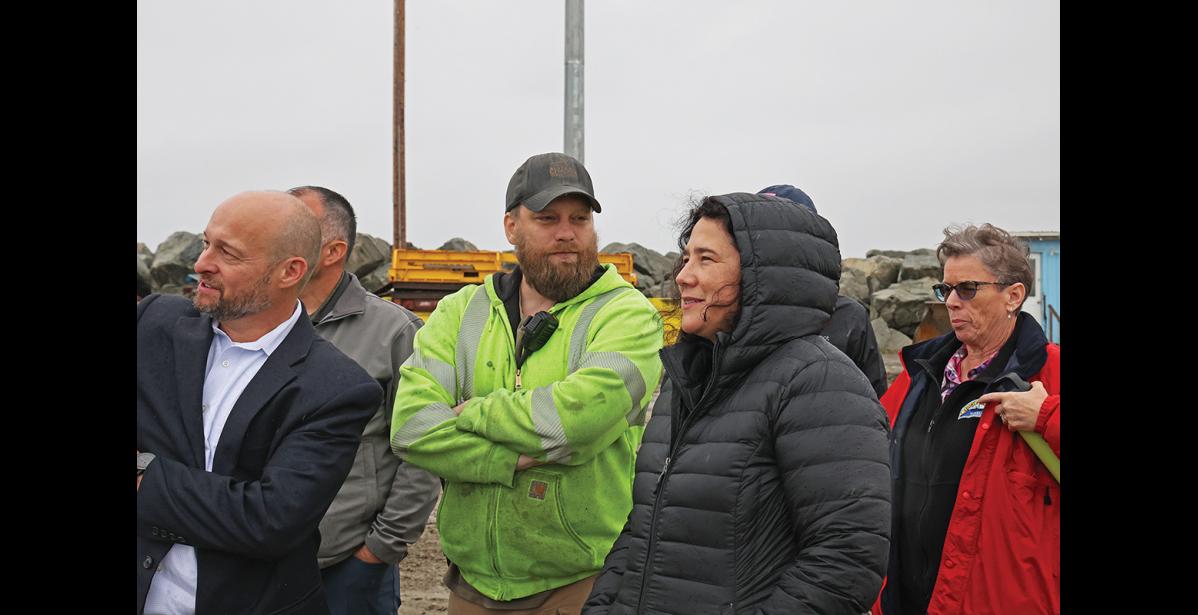
Earlier in the day, Guzman and her team got a tour of the existing port and heard about the plans for expansion. They experienced the potholes on a drive out to Cape Nome. They stopped into AC to shop and look at the price of groceries. A lot of the business concerns that cropped up throughout the day came back to the issue of housing.
City Manager Glenn Steckman told Guzman that Nome is at least 160 housing units short. And the town faces further pressures. Norton Sound Health Corporation is expanding, which Steckman called a “blessing and a curse.” The hospital is currently taking up 82 housing units in town for its employees, he said. Nome could see another housing crunch as the port expansion and large projects like Graphite One bring in more workers. The workforce constructing the port expansion will be housed in a temporary man camp, but Mayor John Handeland said he hoped there could be a potential for turning those facilities into long-term housing as opposed to “glorified trailer”-type housing.
Several speakers at the Katirvik roundtable brought up the housing shortage, too. Erik Noet of BSRHA said the cost of building a house in Nome is now $500 per square foot, with a significant portion of that going toward the cost of shipping. Plus, maintenance costs in the region are rising. With a freeze-thaw cycle made more dramatic by climate change, Noet said that “the houses are starting to dance.”
Guzman said there are unfortunately not many tools within the SBA focused on housing. Instead, she said her office’s focus has been on developing critical technologies, infrastructure and manufacturing, and to make sure small businesses are part of Biden’s “Investing in America” agenda. But she stressed the importance of housing in strategic planning.
“Housing is increasingly a top issue concern for small businesses because if they can’t have affordable housing near them to get a workforce, it impacts their entire strategies,” Guzman said. “It’s important for the community to have a housing strategy.”