
Short-tailed Shearwater–– a tube-nosed seabird that connects Australia and the Bering Sea
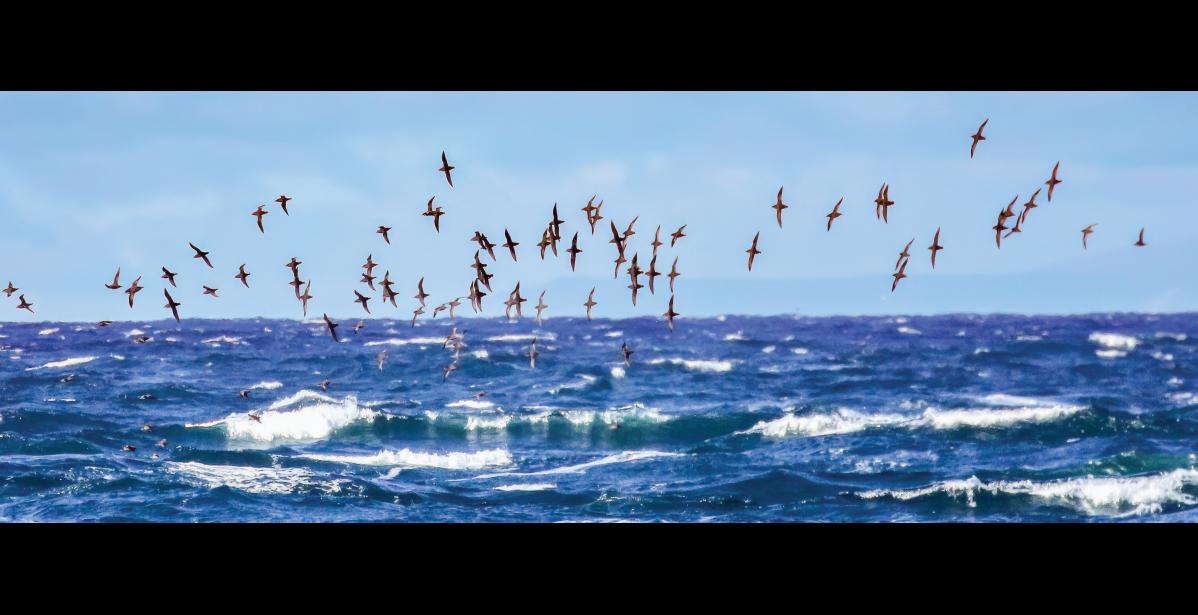
Flying fast on long slender wings over the rich, cold waters of the Bering Sea, hundreds of thousands of short-tailed shearwaters are fattening up for a marathon trans-equatorial migration to their breeding grounds in southern Australia.
A number of our breeding birds are long-distance migrants that overwinter south of the equator. But of our regularly occurring birds, only the short-tailed shearwater makes this migration in reverse—they breed in the southern hemisphere and spend their austral winter (our summer) feeding in the Bering and Chukchi Seas.
The extent of the shearwater’s range, from Arctic to Antarctic waters, rivals that of the arctic tern but shearwaters fly a more direct route so they travel fewer miles each year than do the meandering terns.
Residents of Gambell, and the birders who go there, have a unique window onto the magnitude of the short-tailed shearwater migration. In late August and early September, huge numbers arrive to feed in Gambell’s rich offshore waters.
Historically, in September tallies of over 500,000 shearwaters a day were common, and sometimes mindboggling daily estimates of a million or more passing Gambell were recorded. In most years since 2019, when a massive die-off of short-tailed shearwaters occurred in the Bering and Chukchi Seas, daily high counts have been below 100,000. Still, tens of thousands can be seen passing in a day.
The shearwater’s northward migration typically begins in late April after the breeding season. The entire population makes the approximately six-week trans-equatorial migration from southern Australia to the Bering Sea.
Tracking studies show that some birds dip south into food-rich Antarctic waters for several weeks, building their reserves before migrating north. Northbound shearwaters fly along the western Pacific Ocean and return south through the center of the Pacific.
They typically arrive in regional waters around the third week of June and their numbers build in the northern Bering and Chukchi Seas during August.
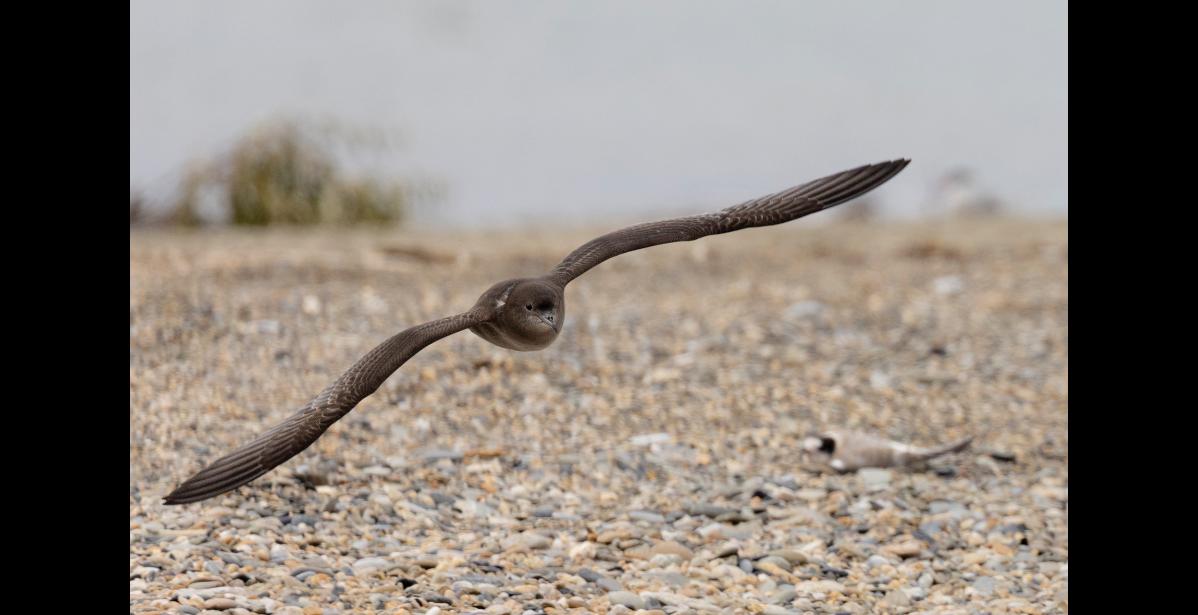
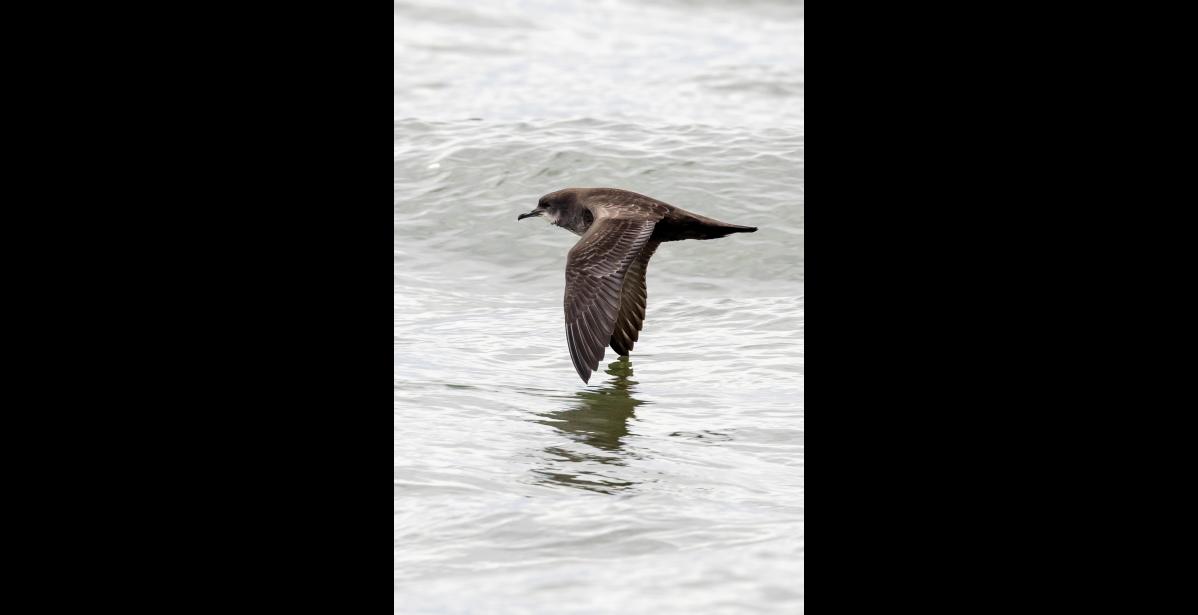
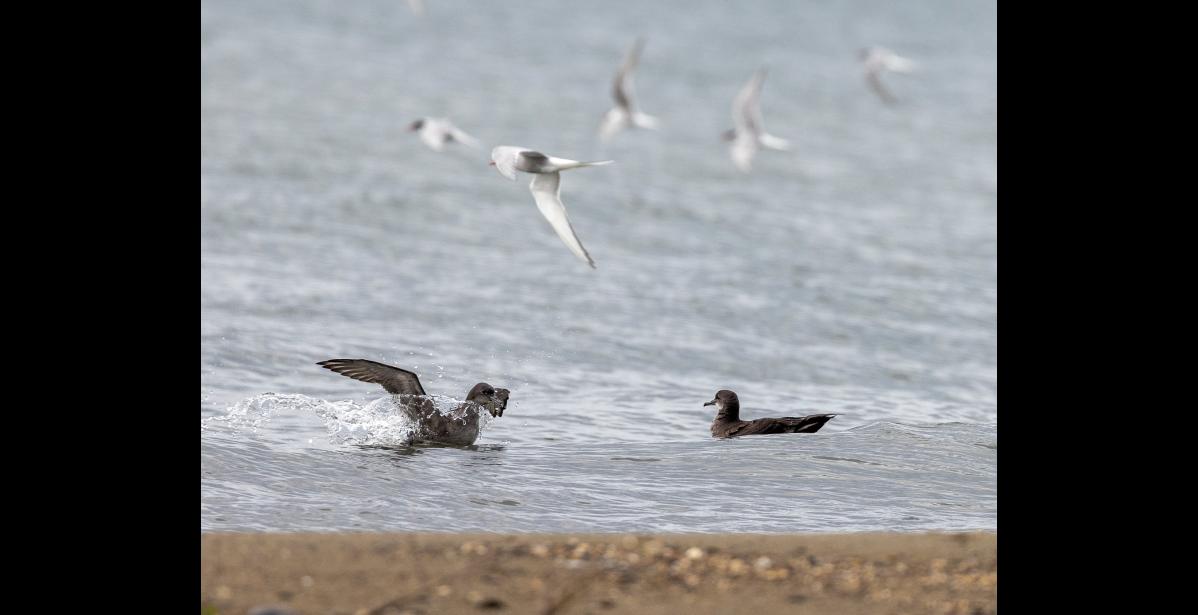
There are relatively few reported sightings of short-tailed shearwaters in Norton Sound. Most of my sightings have been of lethargic, unhealthy-appearing birds. On the rare occasions when I’ve seen healthy birds in action, it’s been a joy to watch these fast and powerful flyers gliding low over the waves and water, wingtips kissing the surface, with sudden plunges into the sea for prey.
Some adults begin their southward migration by the end of August, but many remain off St. Lawrence Island in late September and October, and some linger into November.
Short-tailed shearwaters are in a family of tube-nosed seabirds, which includes shearwaters, petrels, fulmars and prions. These birds have tube-like nostrils on the top of their upper bills.
Unlike most birds, tubenoses have a keen sense of smell. The tubes are thought to help gather scents which guide them to food—plankton or schools of fish that produce slicks of oil with distinctive odors.
All seabirds have salt glands above their eyes that draw salt out of the bird’s bloodstream, allowing them to drink the seawater which surrounds them. Concentrated saltwater exits through a seabird’s nostrils, which in the case of tubenoses, is through the tubes. The tubes may also help prevent rough seas from entering the bird’s lungs.
In the Bering Sea, short-tailed shearwaters eat mainly krill and amphipods, as well as some squid and small fish. They feed by plunging into the water from the air or from the surface, then pursuing their prey with momentum from the dive or by swimming.
They are strong swimmers that regularly dive to around 65 feet and can go much deeper in pursuit of prey. With legs positioned far back on the body for powerful swimming, it is hard for them to move on land or take off without a headwind. A hooked bill helps them hang onto prey.
Between September and April, these shearwaters nest in burrows on islands and headlands of southern Australia and Tasmania. Pairs are often monogamous for life if they successfully produce young.
The parents take turns incubating their one egg, each taking two-week shifts, during which time the parent does not leave the burrow or get fed by its mate. Usually, both parents take two shifts before hatch.
The chicks are known as “muttonbirds” and are harvested for food, down, oil and fat. The harvest is carefully regulated by the Australian government.
Before 2015, seabird die-offs in Alaska waters were rare. They were attributed to disease outbreaks, or El Niño driven cycles of above average ocean temperatures that caused starvation when krill became scarce. Since 2015, mass mortality events affecting shearwaters and other seabirds have occurred regularly. The largest was in 2019.
These more recent die-offs have been associated with massive changes in the Bering and southern Chukchi Sea ecology due to rising ocean temperatures and the decreased extent and duration of sea ice.
Changes include decreasing abundance of krill and zooplankton that shearwaters and other seabirds feed on. Also, the extent of the “cold pool”—the zone of cold water near the seafloor of the Bering Sea—is reduced and unpredictable. The cold pool previously created a barrier preventing the advance of Pacific cod and pollock, but now sometimes allows passage of these food competitors into the northern Bering Sea.
In 2019, vast numbers of dead and dying short-tailed shearwaters were reported from the northern Bering and Chukchi seas to Bristol Bay. Along Russia’s Chukotka Peninsula, thousands of emaciated carcasses washed up on beaches. Puffins, murres, auklets and kittiwakes were also affected but in lower numbers. Starvation was determined to be the primary cause of death.
Warming ocean waters, reduced sea ice extent and the resulting changes in krill distribution have caused several species of whales and other seabirds to shift their distribution northward. Short-tailed shearwaters may do the same.
There may no longer be a million shearwaters passing Gambell in a day, but they still put on a good show.
You can get a glimpse of short-tailed shearwaters streaming by the point at Gambell on Riley Wyna’s video, shot on September 15, here.